Breaking the Silos: How idOS Aims to Solve the Web3 Identity Crisis

Diederick Jacobs
02-02-2026
4 min to read
The transition from digital identity as a passive, siloed record to an autonomous, sovereign asset represents a structural shift in the Web3 economy. Globally, the digital identity market is projected to reach approximately $5 billion in 2026. Yet, despite this explosive potential, the current landscape remains fundamentally constrained by a fragmentation crisis.
Today’s identities are mostly "data honeypots" isolated within proprietary platforms, forcing users into repetitive Know Your Customer (KYC) submissions that lead to drop-off rates as high as 80%. True economic agency in Web3 requires more than just a wallet; it requires a decentralized infrastructure for reusable, chain-agnostic trust.
idOS (Identity Operating System) addresses this gap by proposing a modular three-layer architecture designed to turn isolated data silos into a cohesive "sovereign compliance" ecosystem. This article summarizes the architectural constraints of the current market, the idOS modular solution, and the tokenomic design underpinning this new era of decentralized identity.
The Fragmentation of the Identity Economy
Current identity architectures prioritize platform-specific silos over interoperability. A user verified on one exchange cannot natively port that status to a decentralized finance (DeFi) protocol or a stablecoin payment app without undergoing the entire verification process again. This "ID tax" is a massive overhead, with fintech and stablecoin companies spending up to 25% of their budgets on redundant compliance.
Furthermore, a "Security Gap" exists. Centralized databases act as lucrative targets for cyberattacks; for example, a 2023 attack on the MOVEit tool compromised 2.85 million KYC records. The industry faces a critical design challenge: how to facilitate regulatory compliance, such as Anti-Money Laundering (AML), without creating centralized points of failure that expose users to identity theft.
idOS’s Modular Architecture: The 3-Layer Design
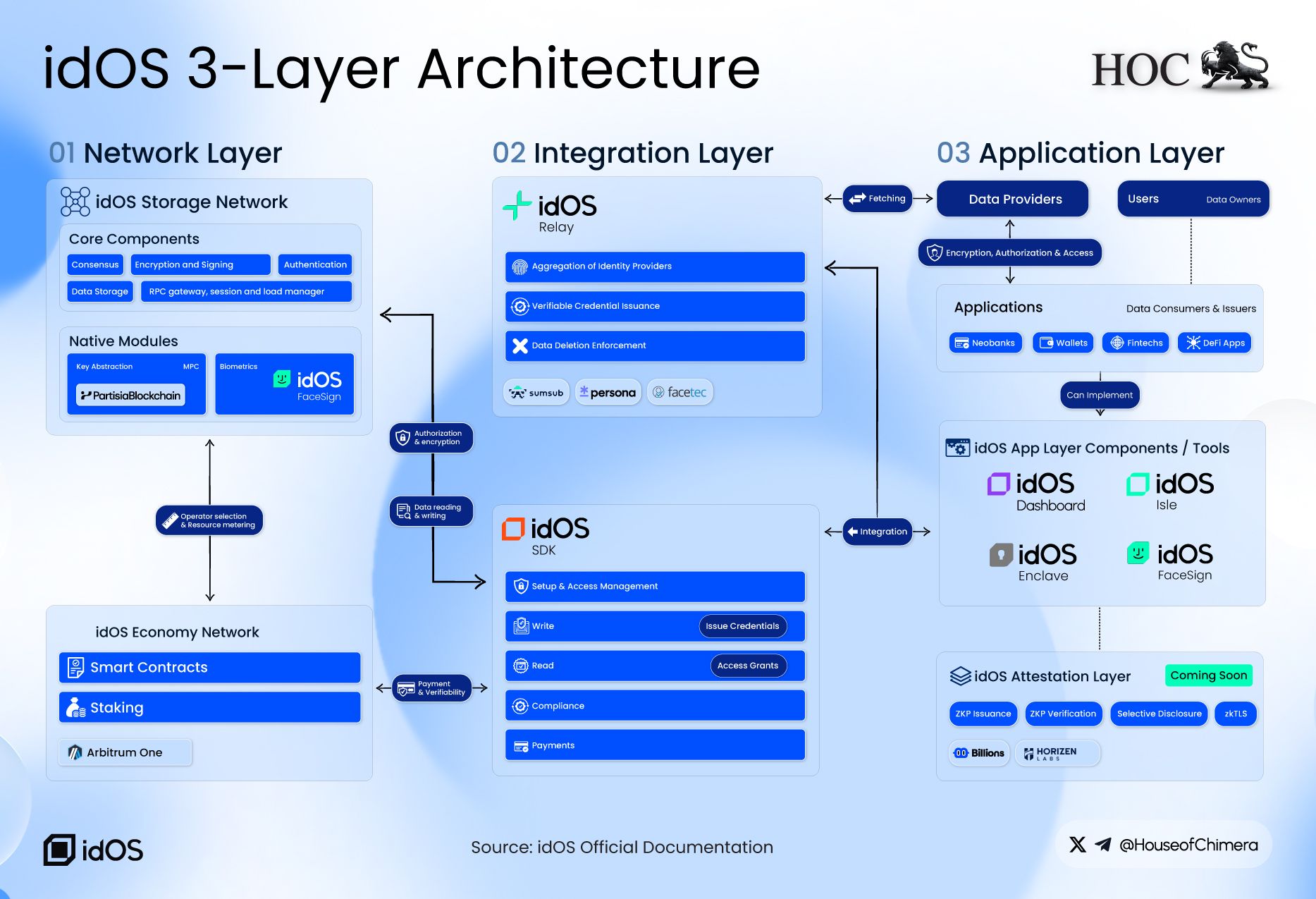
At the core of the idOS approach is a three-layer framework that reimagines identity not as a static file, but as a user-controlled profile built on cryptographic sovereignty.
- The Network Layer: Utilizing a decentralized relational database called Kwil, this layer provides the storage backbone. It employs a specialized consensus mechanism known as Roadrunner to ensure all participants see the same state of encrypted user data.
- The Integration Layer: This serves as the Access Management Protocol, translating user intent into enforceable permissions across disparate blockchains like Ethereum, Solana, and Polkadot. It allows idOS to function as a neutral bridging infrastructure rather than a competing blockchain.
- The Application Layer: Through modular SDKs and a user dashboard, developers can integrate idOS to handle compliance without ever storing sensitive Personally Identifiable Information (PII) themselves.
Bridging the Trust Gap: Permissioned Validators and Time Locks
To address reliability issues with institutional gateways, idOS introduces a permissioned validator set. Operators must undergo Know Your Business (KYB) verification by the idOS Association in Zug, Switzerland, ensuring the network meets legal and compliance standards.
To reconcile the "right to be forgotten" (GDPR) with AML mandates, idOS utilizes Time Locks. When a user grants access for compliance, the system can postpone data deletion until the legally required retention period concludes. This ensures that while users "hold the keys" to their data, institutions maintain the audit trails required by global regulators.
The Economics of Identity: The IDOS Token Model
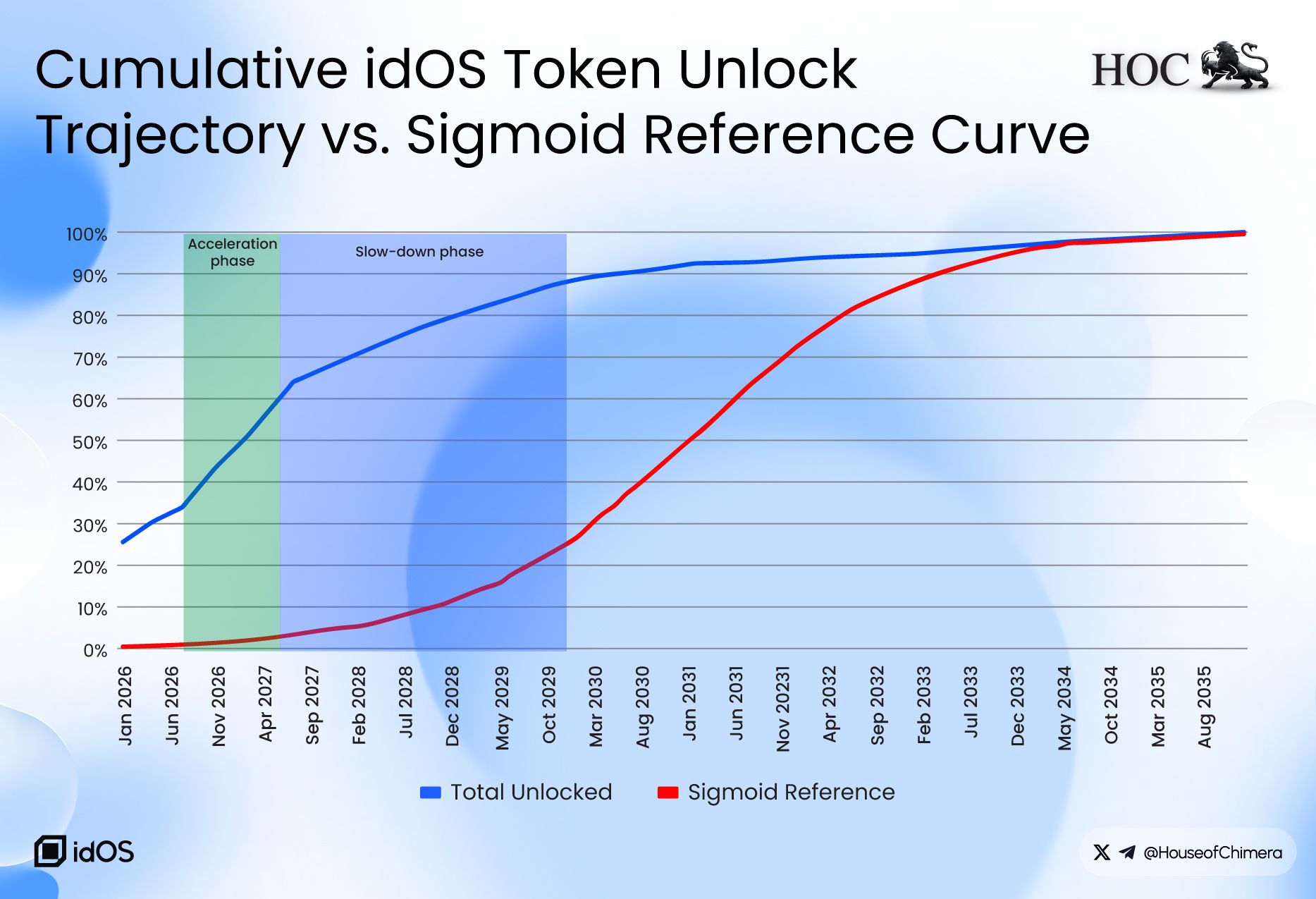
The idOS economy is powered by the IDOS token, a utility and governance asset capped at 1 billion tokens on Arbitrum One.
- Front-Loaded Emissions: The model features a steep early inflation phase, with over 30% of the supply entering circulation shortly after the Token Generation Event (TGE) to ensure deep market liquidity.
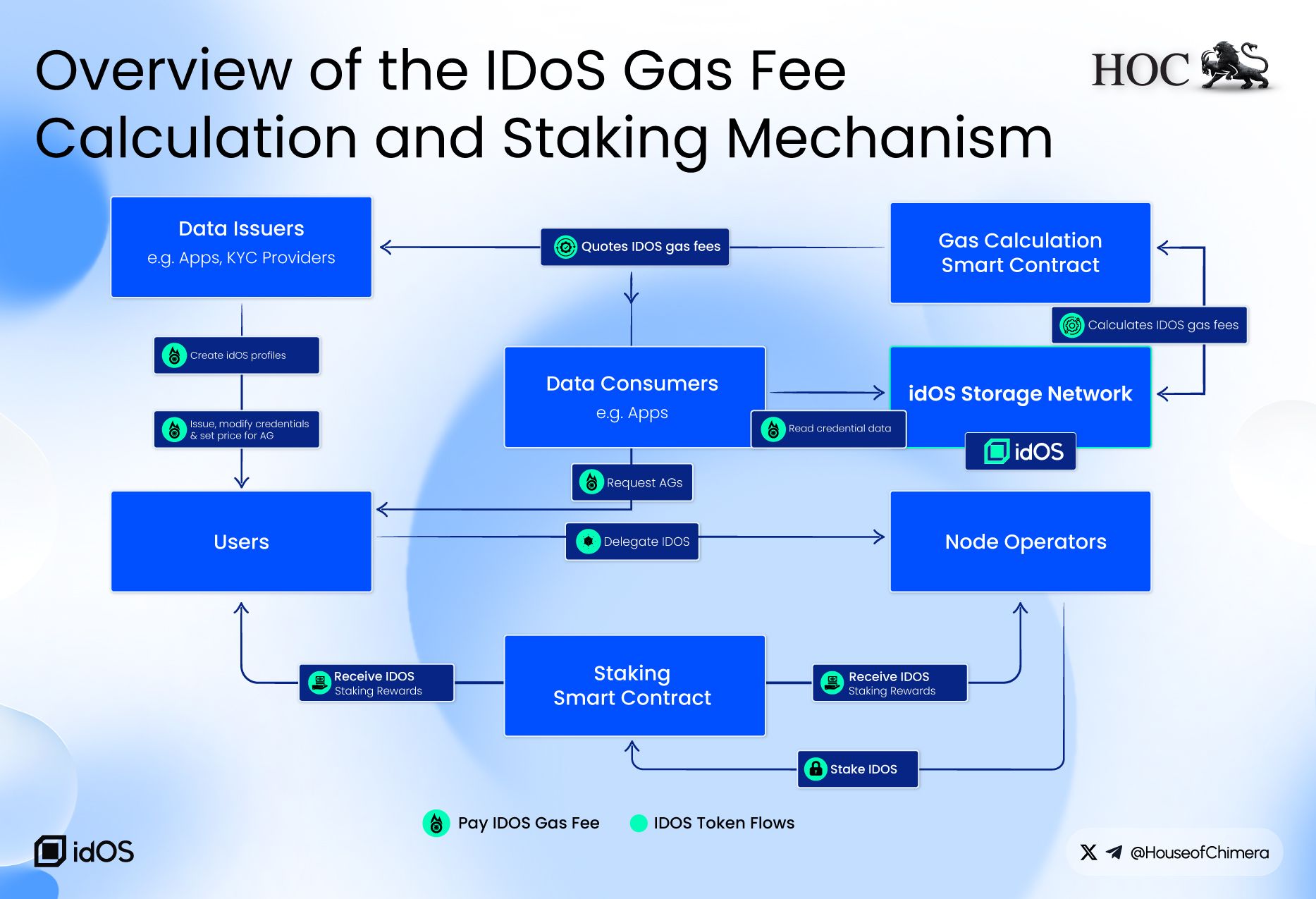
- Revenue Streams: Protocol value is driven by two flows: network gas fees for data operations and a 25% markup on "Access Grant" fees when data consumers request pre-verified credentials.
- Stakeholder Alignment: Staking rewards are front-weighted to attract validators, while a consortium-style seed round, including partners like Circle, Ripple, and NEAR, aligns the protocol with major L1/L2 ecosystems.
A New Market Structure
We are witnessing a shift from platform-specific "honeypots" to a unified trust economy. While traditional KYC vendors offer robust verification, they cannot provide the cross-chain reusability and user-centric privacy of a decentralized layer.
The idOS architecture, combining the speed of decentralized storage with the truth of on-chain access grants, positions it as critical infrastructure for the Web3 compliance stack. By standardizing how identities are stored and shared, it lays the rails for an economy where users retain ownership of their data while moving seamlessly across the decentralized web.
Read the Full Research Paper
This summary captures only a fraction of the architectural deep dives and competitive analysis. To explore the complete Porter’s Five Forces analysis of the identity market and the full tokenomic modeling, read the full research paper here.