The Rise of Robinhood Chain
8 min
Published · Updated
Beginner
Add FAQ
In this article
Robinhood Chain was pitched as an RWA platform, but on-chain data tell a different story: stablecoins and lending dominate TVL, while RWAs remain thin. A deep dive into what's really driving the chain.
Overview
Key takeaways
Stablecoins Drive Growth, Not RWAs: Total market cap crossed $453M in ten days, with ~66% stablecoins (led by USDG), while tokenized RWAs make up just 4.5% of TVL.
A Memecoin Sparked the First Volume Spike: DEX volume hit a record $560M on July 8th, driven by CASHCAT's 715% single-day surge. Weekly volume is up 10x+ since launch.
Liquidity Is Concentrated and Fragile: Morpho, Ethena, and Lighter hold most external DeFi TVL, with ~$110M of USDG in just two Morpho vaults, leaving little buffer against a large withdrawal.
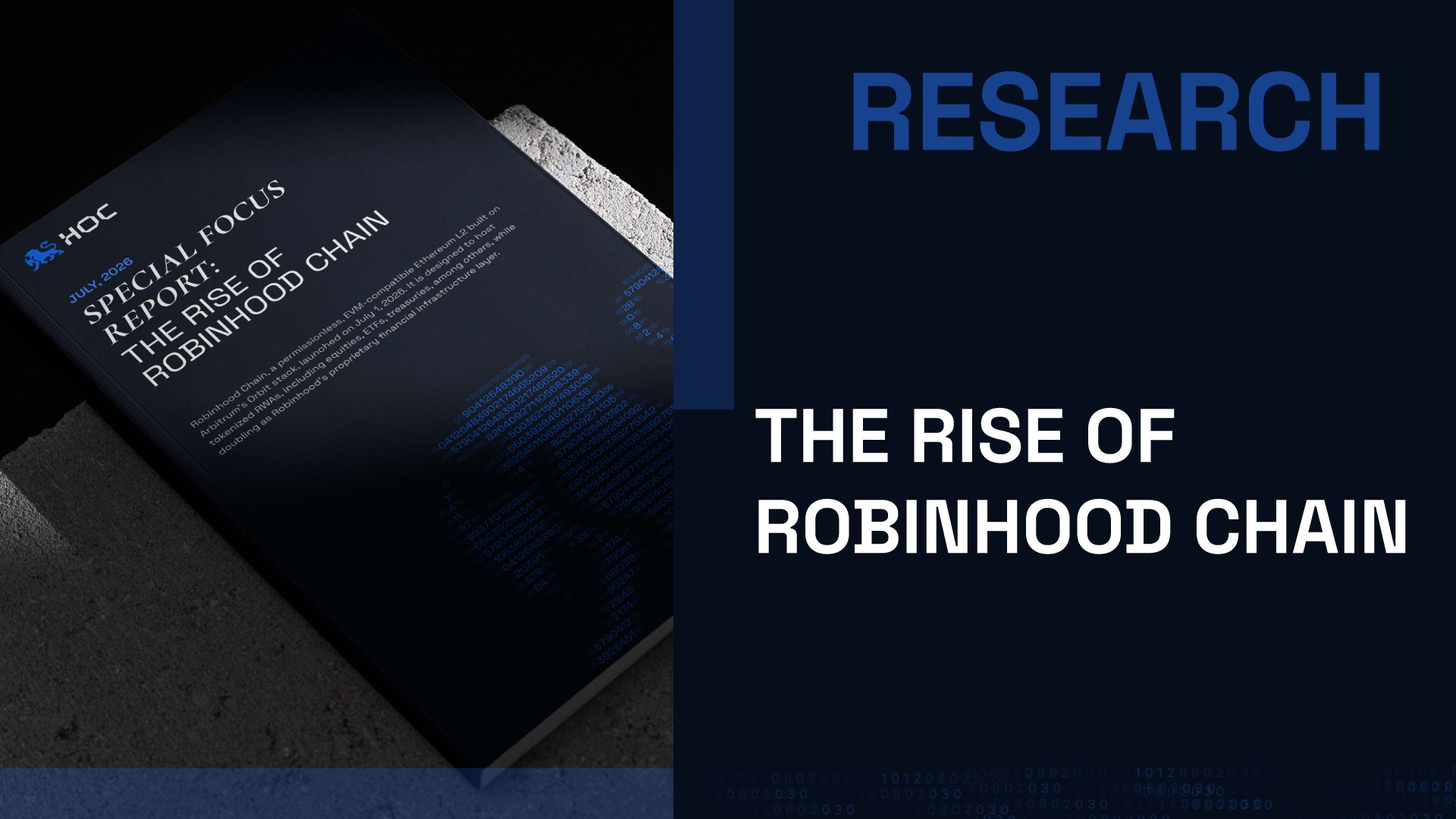
Robinhood Chain, a purpose-built infrastructure layer for tokenized RWAs, has seen rapid early growth since its launch earlier this month. The composition of that growth, though, tells a more nuanced story than the RWA narrative alone.
This report examines the chain’s first ten days of on-chain activity, tracking TVL composition, stablecoin and DEX volume dynamics, and RWA positioning; simultaneously benchmarking it against its closest competitor, Coinbase’s Base.
WHAT IS ROBINHOOD CHAIN?
Robinhood Chain is a permissionless, EVM-compatible Ethereum L2 built on Arbitrum’s Orbit stack that went live on July 1, 2026. The launch comes against a rough patch for the company, with their Q1 2026 crypto revenue falling by 47% YoY to $134 million. Robinhood pitched the chain as a platform meant for tokenized Real World Assets (RWAs), but ten days of on-chain data paints a different picture, wherein more than RWAs, the chain’s volume and market cap is being driven by stablecoins and lending products.
HOW IT WORKS
Transactions settle in sub-second block times, use ETH as gas, and use a First-Come-First-Served ordering model that prevents anyone from jumping the transaction queue, which is common on other networks. Funds are bridged via the canonical Arbitrum bridge or alternative third-party routes such as LayerZero, Relay, and Chainlink; however, this sacrifices trustlessness for speed. For the first 90 days, starting from launch, Robinhood is waiving most transaction fees and covering gas fees for swaps that cost more than $5, effectively creating a zero-cost environment
Tokenized stocks on the chain do not actually provide users with ownership; they are instead just debt-instrument “wrappers” that track the price exposure of the underlying stock, meaning users do not get voting rights, shareholder protections, or a share of the company, as they typically do in TradFi.
ROBINHOOD’S TVL GROWTH: WHERE IS IT REALLY COMING FROM?
The Protocol’s TVL stood just above $50 million just one day after launch, led by Robinhood’s own stock tokens and external protocols such as Morpho at $11.9 million and Lighter at $10.1 million. By day three, Morpho had taken the lead, and Ethena’s TVL had grown roughly tenfold in 24 hours, wherein a single day added about $24 million, which was concentrated almost entirely in lending and yield-bearing stablecoins
By the tenth day since launch, the total asset market cap had crossed $450 million. Roughly $300 million of that, which is around 66%, is stablecoins, with USDG alone accounting for close to a third of the total.
Tokenized RWAs, which is the stated purpose of the chain, by the team itself, stands at just $12.8 million; this value is merely 4.5.% of the entire protocol’s TVL and just 2.8% of the total asset landscape
Bridge activity depicts a similar picture, wherein the canonical bridge TVL reached $70 million by end of week one, and net inflows, which were under merely $6 million in the initial days of the first week, surged to nearly $90 million from July 6th onward.
The first volume spike was not driven by RWAs. DEX volume hit a record $560 million on July 8th, driven mainly by CASHCAT, a memcoin that gained more than 715% within just 24 hours. Weekly DEX volume more than ten-fold since launch, but whether that activity sustains into sustainable usage or fades with the memecoin hype is the near-term signal to track.
ROBINHOOD CHAIN VS. COINBASE’S BASE CHAIN: TVL & STABLECOIN COMPARISON
Base, which is the Layer 2 chain launched by Coinbase, is three years old and carries roughly $4.5 billion in TVL against Robinhood Chain’s $290 million. However, Base’s share of stablecoins that sits on the network is just 3.8% against Robinhood Chain’s 66%; while the share of RWAs are both closely comparable.
Practically, both chains currently function as DeFi venues heavy on stablecoin volume rather than RWA-specific platforms. What gives Robinhood the edge is that its flows originate from a TradFi retail funnel rather than one which is crypto-native.
ROBINHOOD CHAIN RISKS: LIQUIDITY CONCENTRATION & REGULATORY OUTLOOK
Concentration is the chain’s central vulnerability at this stage. Since Morpho, Athena, and Lighter account for the major external DeFi TVL, a withdrawal from any one of them, or a compression in lending yields, would visibly hit the TVL chart with barely any safety net elsewhere. USDG is the sharpest single point of fragility as roughly $110 million of it sits across two Morpho vaults, meaning a large share of the chain’s stablecoin liquidity runs through a very small handful of strategies. USDG itself is fully backed 1:1 by cash and short-dated U.S. government securities under MAS and MiCA oversight, which limits its risk of being depegged, however, a shift in either vault would still significantly disrupt on-chain liquidity.
The CASHCAT-driven volume spike also reads more as a sign of retail attention than a mature user base, additionally, the zero gas fee subsidy expires 90 days post-launch, effectively removing a cost advantage that is currently supporting early adoption.
On the regulatory side, the SEC has stated that tokenized stocks are securities regardless of the underlying chain. Robinhood’s SPV-based stock tokens carry added exposure, wherein OpenAI has disputed the legality of its own token, and Robinhood is facing a review from the EU over its tokenized OpenAI and SpaceX shares.
THE BOTTOM LINE
Ten days in, the on-chain data from Robinhood Chain depicts that it is more of a stablecoin and lending venue, with a retail speculative layer on top, and a small but growing RWA presence; not yet the RWA-first platform that it was pitched to be. However, that is not necessarily a contradiction, as liquidity typically arrives before applications in DeFi, so RWAs may simply be lagging rather than being entirely absent from the picture.
What makes the chain worth watching is not its decentralization or scale, but instead, its distribution. Robinhood has roughly 28 million funded brokerage customers and $377 billion in platform assets, so even a 2% conversion of that into on-chain activity would be a significant, sustainable source of liquidity that no other broker-native chain currently has.
The forthcoming 12-month time period hinges entirely on distribution. If Robinhood successfully manages to route yield, stock trading, and possibly even retirement or options products onto the chain, the RWA share of the TVL should catch up to the liquidity already forming beneath it. If it does not, the chain risks remaining what it currently is, i.e., just a venue for stablecoins and memecoins that never quite became what it originally set out to be.
Frequently asked questions
What is Robinhood Chain?
Robinhood Chain is a permissionless, EVM-compatible Layer 2 built on Arbitrum and designed for financial services and tokenized real-world assets.
Is Robinhood Chain mainly an RWA platform?
Robinhood designed the network around tokenized RWAs, but its early activity was dominated by stablecoins, lending, and memecoin trading.
What is driving Robinhood Chain activity?
Stablecoins, DeFi applications, memecoin trading, and perpetuals have all contributed to activity, while tokenized RWAs have grown from a relatively small base.
Related insights